
How to inject GLP-1 medication: a step-by-step guide
Published 3 February 2026 · Updated 14 October 2026

How to inject GLP-1 medication in one sentence: a short, fine needle goes into the fat layer under the skin of your stomach, thigh or upper arm, you press the dose button, and you hold it in for the count given in your leaflet. Every GLP-1 pen used for weight loss in South Africa works this way. The injection is subcutaneous, under the skin, never into muscle or a vein.
The technique takes about a minute to learn and most people manage it comfortably from the first week. Your first injection should still be demonstrated by a doctor, nurse or pharmacist, because the details that keep injections comfortable and doses accurate, like needle angle and the hold count, are easier shown than read.
This guide covers the class as a whole: weekly and daily pens, needle sizes, site choice and rotation, storage through power cuts and travel, missed doses, and how to get rid of needles safely in South Africa. It also covers where the injections sit in the South African system: which medicines are registered, what drives the cost, and why adverts selling them without a doctor are a warning sign.
Who should demonstrate your first GLP-1 injection?
A doctor, nurse or pharmacist. Ask for a demonstration before you inject anything: a doctor or nurse can walk you through the technique during a consultation, and pharmacists demonstrate pen technique when you collect. Both are trained to do exactly this, and it takes about five minutes.
In a telehealth programme the walk-through happens in the online consultation, with the pharmacist as backup at collection. Related reading: what to expect.
Use the demonstration for the parts a leaflet cannot check: how you hold the pen, the angle you insert at, and how you count the hold. Having those corrected once, live, prevents most later problems.
Before the first dose, read the leaflet in your box. Check that the pen holds the medicine and strength your doctor confirmed, that it is in date, and that the liquid is clear and colourless. A cloudy pen, or one with particles floating in it, goes back to the pharmacy.
How do you inject a GLP-1 pen, step by step?
Wash your hands, attach a new needle, check the flow on a new pen, dial your dose, insert the needle straight into the stomach, thigh or upper arm, then press and hold the button for the full count before withdrawing. The sequence below fits the weekly and daily pens registered in South Africa; your leaflet is the final word on your specific device.
- Wash your hands. Pull the cap off the pen and check the liquid again.
- Attach a new needle. Most pens here use screw-on pen needles; push the needle straight on, twist until secure, then remove the outer and inner caps.
- If the pen is new, do the flow check the leaflet describes. This clears air and confirms the pen works; a drop at the needle tip means you are ready.
- Turn the dose selector to your dose. The number in the dose window is what counts, not the sound of the clicks; the dial is covered in detail in how the Ozempic dose dial works.
- Choose a clean, dry patch of skin on your stomach, thigh or upper arm.
- Insert the needle all the way in, straight at 90 degrees.
- Press and hold the dose button. Keep the needle under the skin for the full count in your leaflet, usually a slow count of five to ten seconds, until the counter shows zero.
- Pull the needle straight out. Do not rub the site. Unscrew the needle into a sharps container and put the pen cap back on.
Injecting a vial and syringe presentation, which some tirzepatide stock in South Africa uses, has extra draw-up steps: the dose is drawn from the vial with a separate syringe before injecting at the same sites and depth. The full Mounjaro routine, including priming the KwikPen, is in how to inject Mounjaro.
What needle do you use on a GLP-1 pen?
A standard screw-on pen needle, usually 4 to 8 mm long and 31 to 32 gauge, which is thinner than a sewing pin. Needles are not included in the pen box: pharmacies sell them separately, and the same needle types fit the weekly and daily pens sold in South Africa.
Shorter is generally better. A 4 mm or 5 mm needle reaches the fat layer reliably on most adults without pinching the skin, and a short needle is the least likely to reach muscle. If you are very lean or carry more weight, ask the pharmacist which length suits your body.
Every injection uses a fresh needle. A reused tip blunts, hurts more, raises infection risk and can block or leak. Never store a pen with the needle attached either: it can leak, let air into the cartridge and block the next dose.
Buy a month's supply of needles with each pen so you never face an injection day without one.
Where should you inject GLP-1 medication?
Into the fat layer under the skin of the stomach, thigh or upper arm. All three sites are approved and absorption is reliable at each, so pick whichever you can reach comfortably and rotate within it. The needle goes into soft, normal skin every time, never into muscle or a vein.
| Site | Where exactly | Notes |
|---|---|---|
| Stomach | At least 5 cm from the navel, left or right | Largest area, easiest to see and rotate; most people's default |
| Thigh | Front and outer front of the upper leg | Easy to reach seated; avoid the inner thigh |
| Upper arm | Back of the arm, over the soft tissue | Awkward to do one-handed; useful when someone helps |
Skip any patch of skin that is bruised, tender, scarred, hardened or broken, and stay clear of moles and stretch marks.
Why does rotating injection sites matter?
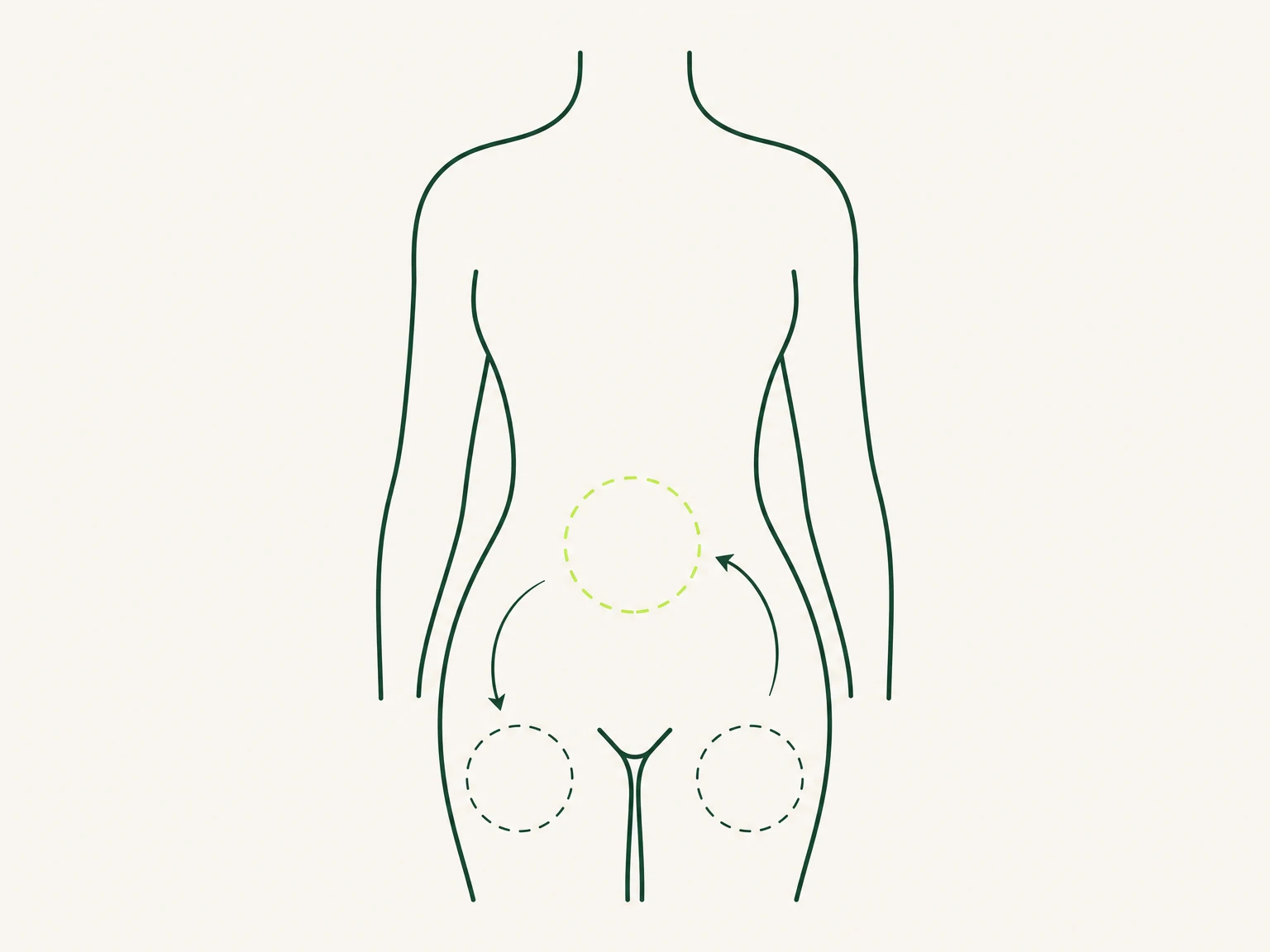
Injecting the same small spot week after week can build firm, fatty lumps under the skin, a change called lipohypertrophy. Medicine injected into those lumps absorbs unpredictably, so a dose that should work can behave as if it were smaller or larger.
Rotation prevents it. Stay on the same schedule, weekly or daily depending on your medicine, but move the needle: switch sides each time and shift a few centimetres from the last spot within each site.
A simple pattern works: left stomach, right stomach, left thigh, right thigh, then back to the start. If you prefer one site, treat the area around the navel as a clock face and move along an hour each week. If a site develops a lump anyway, leave it alone until it settles and show your doctor at the next review.
Does a GLP-1 injection hurt?
Usually barely. Pen needles are short and thin, and most people describe a small pinch or nothing at all. The needle enters the fat layer, not muscle, and the dose volume is small, so this is not the deep intramuscular injection you may remember from vaccinations.
Cold liquid stings more than room-temperature liquid. A pen that lives in the fridge can sit out for 15 to 30 minutes before injecting; an in-use pen kept at room temperature is comfortable straight away.
A spot of blood or a small bruise afterwards is normal and means nothing about the dose. Pressing a clean tissue on the site for a few seconds is all it needs.
Which GLP-1 injections are available in South Africa?
Four registered medicines. Semaglutide is sold as Wegovy, a weekly injection registered for weight management, and as Ozempic, a weekly injection registered for type 2 diabetes. Tirzepatide is sold as Mounjaro, a weekly injection registered for diabetes and weight management. Liraglutide is sold as Saxenda, a daily weight management injection.
| Brand | Active ingredient | How often | Registered use in South Africa |
|---|---|---|---|
| Wegovy | Semaglutide | Once a week | Weight management |
| Ozempic | Semaglutide | Once a week | Type 2 diabetes |
| Mounjaro | Tirzepatide | Once a week | Type 2 diabetes and weight management |
| Saxenda | Liraglutide | Once a day | Weight management |
All four are Schedule 4 medicines injected the same way: subcutaneously, with a short pen needle, using the technique in this guide. What differs is the dose schedule, the device detail and the clinical profile. Availability, trial results and how the options compare are covered in weight loss injections in South Africa.
Which medicine fits, if any, is decided by a doctor on assessment, weighing your history, your current medicines and the exclusions.
What happens if you miss a GLP-1 dose?
Never inject a double dose to catch up. Weekly pens have a catch-up window: Mounjaro's South African professional information allows a missed weekly dose to be taken within four days, after which you skip it and inject on your normal day. Semaglutide leaflets set their own window, so check yours.
Daily liraglutide is simpler. If a dose is missed, skip it and take the next one at the usual time. After a break of more than a few days on any of these medicines, speak to your doctor before restarting: tolerance fades during a gap, and nausea can return at a dose your body had settled into, so treatment sometimes restarts at a lower strength.
You can also move your regular injection day, as long as the minimum gap between doses in your leaflet is kept; your doctor or pharmacist can confirm the spacing for your medicine.
How do you store GLP-1 pens?
Unopened pens live in the fridge at 2 to 8 degrees, away from the cooling plate at the back. Freezing ruins the medicine: a pen that has frozen is discarded even after it thaws.
Once a pen is in use, it can be kept at room temperature below 30 degrees for a limited period that differs by product. The Mounjaro KwikPen, for example, is used within 30 days of first use per its South African professional information; other pens carry limits between roughly four and eight weeks. Your leaflet gives the exact number, and the cap stays on between doses to protect the medicine from light.
Two dates matter: the printed expiry, and your own in-use count. Writing the date of first use on the pen label settles every later doubt about whether a pen is still good.
South African power cuts rarely threaten a pen. Keep the fridge closed and it holds its temperature for a few hours; for a longer outage, move pens to a cooler bag with ice bricks, wrapped in a cloth so they never touch the ice, because direct contact can freeze the medicine.
For travel, a small cooler bag covers long trips, and pens fly in hand luggage, never in the hold, where temperatures drop below freezing.
How do you dispose of needles in South Africa?
Used needles never go in household rubbish. They are medical sharps waste, and a loose needle in a bin bag is a real injury risk to whoever handles it next.
Buy a puncture-proof sharps container from your pharmacy and drop each used needle in straight after injecting. When it is about three-quarters full, seal it and hand it in: many pharmacies take sealed sharps containers back, and clinics and hospitals with sharps disposal facilities do the same. Local diabetes organisations in South Africa have campaigned on exactly this, because surveys show most used pen needles here still end up in the dustbin.
Pens themselves, once empty and with no needle attached, can also be returned to the pharmacy for disposal rather than binned.
What does a GLP-1 injection cost in South Africa?
Dose moves the number most: everyone starts low and steps up over months, and each step usually means a higher-priced pen. Presentation matters too, since some medicines come as multi-dose pens and others as single-dose vials, priced differently per week of treatment. The medicine price itself is regulated under the Single Exit Price system, so pharmacies land within rand of each other; the small gaps come from dispensing fees. We do not sell medicine. Prices vary by pharmacy and dose; confirm with your pharmacy.
Injecting adds its own small line items: pen needles and a sharps container from the pharmacy. Doctor consultations and any baseline blood tests are billed separately by the doctor's practice and the pathology lab. The component-by-component breakdown, including what medical aid does and does not pay, is in GLP-1 treatment costs in South Africa.
Are "semaglutide injections for sale" adverts legal in South Africa?
No. Every GLP-1 medicine is Schedule 4, which means two things under the Medicines Act: it may not be advertised for sale to the public, and it may only be dispensed by a licensed pharmacy after a doctor has assessed the patient and authorised treatment. An advert offering semaglutide injections for sale to anyone who pays, with no doctor involved, is describing an unlawful sale.
What those listings deliver is the bigger problem. SAHPRA has warned the public to use only registered Ozempic products after falsified pens appeared in the country, and regulators have seized unregistered compounded GLP-1 stock. A compounded or falsified product has no verified strength, sterility or active ingredient.
Injection technique suffers too. These products often arrive as unlabelled vials with no leaflet, no device instructions and no cold-chain record, so the dose, depth and storage rules in this guide cannot be applied to them with any confidence.
The registered route has two steps that no lawful seller skips: a doctor confirms that treatment is clinically appropriate, and a licensed pharmacy dispenses at its regulated price. How to tell a legitimate telehealth service from a reseller is covered in buying Ozempic online in South Africa.
Common problems and when to get help
A drop of liquid on the skin after you withdraw usually means the needle came out too soon. Do not inject extra to compensate; next time hold for the full count. Mild redness or itching at the site is common and settles within days.
Technique is the easy part of treatment; the medicines themselves commonly cause digestive effects such as nausea and constipation, especially around dose increases, and they are not suitable for everyone, including during pregnancy. The full picture is in managing GLP-1 side effects, and your doctor screens for the exclusions before treatment starts.
Two situations need action rather than patience. If you inject much more than your dose, contact your doctor the same day. And severe, persistent stomach pain, with or without vomiting, is not an injection problem: seek medical care immediately.
Frequently asked questions
Do you pinch the skin when injecting a GLP-1 pen?
Usually no. Pen needles are short enough to inject straight in at 90 degrees without a skin fold; follow your leaflet if it advises pinching for your body type.
Can you inject a GLP-1 pen straight from the fridge?
Yes, it is safe, but cold liquid stings more. Letting the pen sit at room temperature for 15 to 30 minutes first makes the injection more comfortable.
Can you reuse a pen needle?
No. Needles are single-use: a reused tip is blunter and more painful, raises infection risk and can block or leak.
What time of day should you inject GLP-1 medication?
Any time that suits you, with or without food. Weekly medicines are taken on the same day each week, and daily ones at roughly the same time each day.
What if some liquid leaks out after the injection?
A small drop at the site is common and rarely matters. Do not inject extra; next time keep the needle under the skin for the full count before pulling it out.
Do GLP-1 injections have to be given by a nurse or doctor?
No. The pens are made for self-injection at home once a professional has demonstrated the technique. Ask for that demonstration at your first consultation or when you collect from the pharmacy.
Do you need an alcohol swab before a GLP-1 injection?
Not always. Clean, dry skin is the requirement: wash the site with soap and water, or use a swab and let the skin dry fully before injecting, because wet alcohol stings.
Can you inject through clothing?
No. You need bare, clean skin so you can see the site, avoid bruises and scars, and insert the needle fully.
Sources
This article is general information, not personal medical advice. Treatment decisions are made by a registered doctor on assessment. Individual results vary. We do not sell medicine. A consultation and a valid prescription from a registered doctor are required; treatment is never guaranteed.